Belt Tracking & Misalignment Control
The reference standard in conveyor belt misalignment control.
Tru-Trac belt trackers correct belt drift continuously, autonomously and mechanically. Designed for demanding bulk-handling operations, the range helps reduce spillage, belt-edge damage, structural contact, carryback contamination, manual intervention, safety exposure and unplanned stoppages.
Correct the belt before the edge becomes the failure.

REF · Apex Tracker · installation context
02 / Verified outcomes
Field-tested in the conveyors that punish equipment first.
Anonymised case outcomes from PGM, platinum, coal and copper operations. Customer names shown only where written approval is on file.
Case 01
20sto centralisation
A Rustenburg PGM operation had suffered a two-day production halt after multiple previously installed tracking products failed to resolve the issue. Tru-Trac assessed the belt, supplied two correctly specified trackers, and centralised the belt within 20 seconds. Production resumed under full load from the first shift.
PGM mining · Rustenburg
Case 02
~4 yrsof belt life
At a South African platinum operation, Tru-Trac installed a Taper Trough Tracker after the loading zone and a Dual Return Tracker before the tail pulley. Spillage and edge damage were eliminated from day one, and the belt operated for almost four years before replacement.
Platinum · South Africa
Case 03
12+ mowhere previous trackers lasted < 1 week
On a German coal-sector stacker reclaimer with a 2,300mm belt running at 9.6 m/s, previous tracker solutions lasted less than one week. Tru-Trac severe-duty tracking remained in service after more than 12 months, and the customer adopted the solution for similar applications.
Coal · Germany
Case 04
0structural contact events
At a Zambian copper mine, mistracking had caused structural contact, edge fraying and fire risk. Tru-Trac Apex tracking technology centralised the belt on start-up, stopped structural contact and led to site-wide standardisation.
Copper · Zambia
03 / The system problem
Why misalignment becomes a system problem.
Belt misalignment is rarely just a belt position issue. Once the belt moves off centre, the conveyor begins to create secondary costs across the system. Edge contact damages the belt. Spillage and carryback contaminate idlers and pulleys. Manual adjustment increases safety exposure. A problem that starts as drift becomes a maintenance cycle.
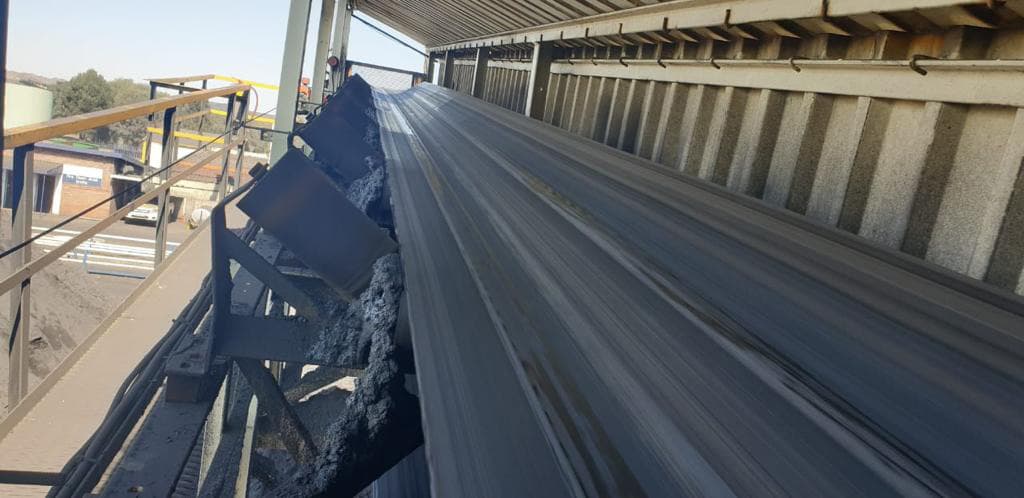
Consequence 01
Belt-edge contact
Operational effect
Edge fraying, tearing, carcass damage and reduced usable belt width.
Commercial consequence
Premature belt replacement, emergency repairs and increased downtime risk.
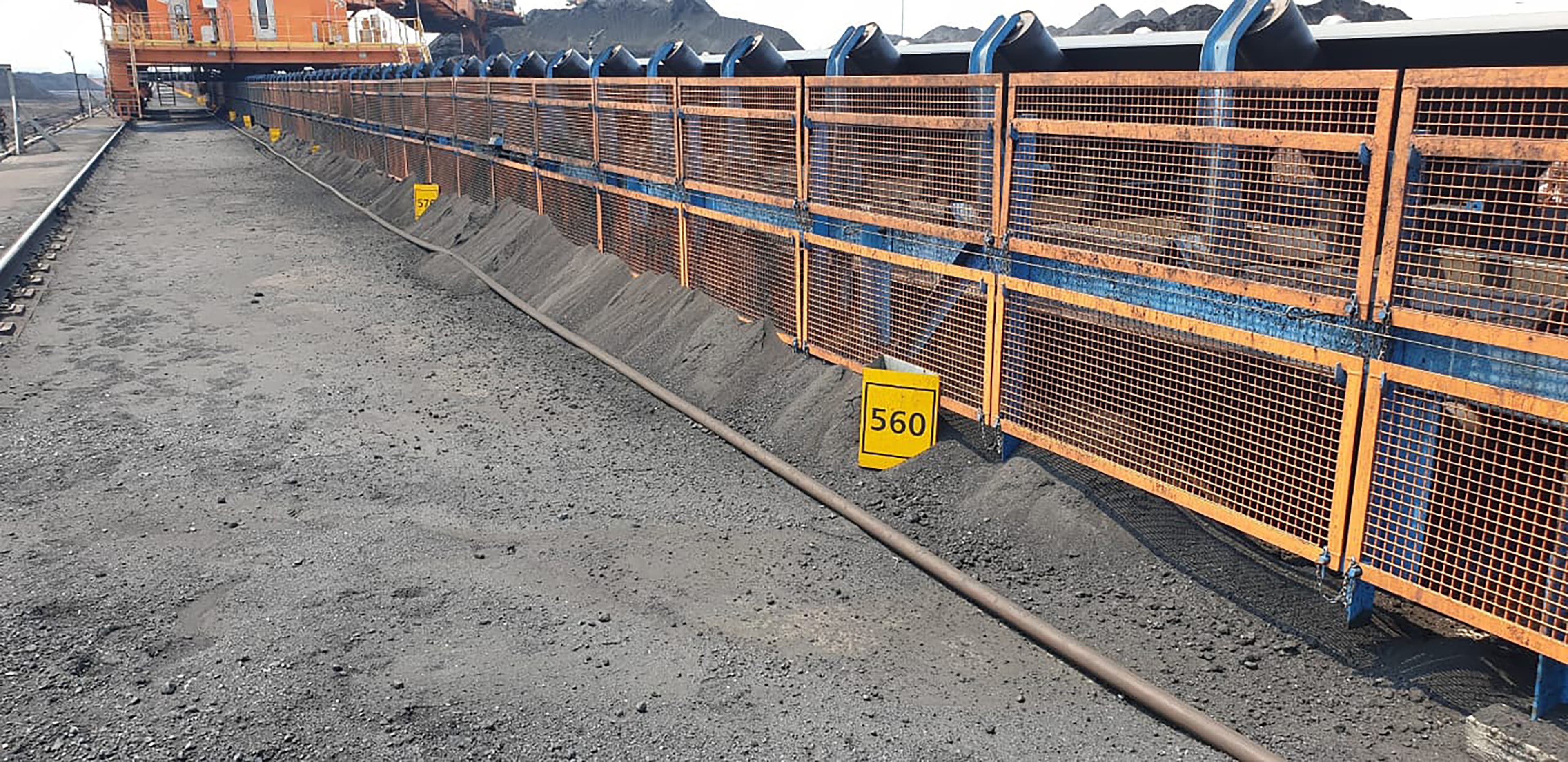
Consequence 02
Spillage and carryback
Operational effect
Material escape, clean-up load, contamination of return idlers and pulley surfaces.
Commercial consequence
Higher maintenance hours, safety exposure and component replacement cost.
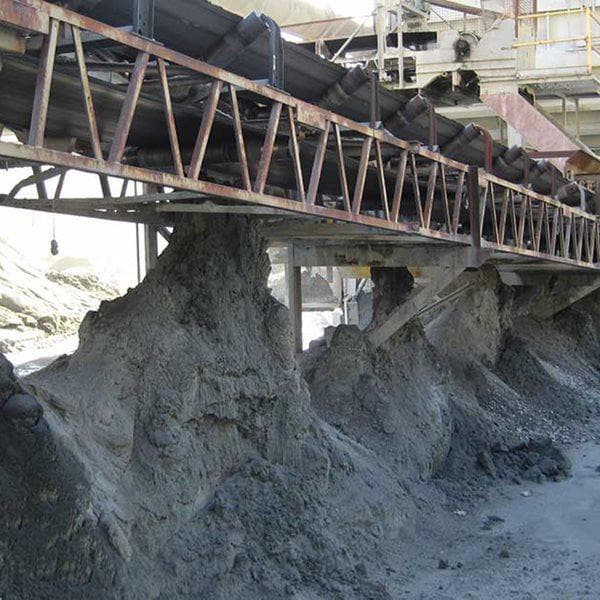
Consequence 03
Carryback contamination
Operational effect
Return-side material build-up on idlers and pulleys; belt-cleaning failure.
Commercial consequence
Recurring clean-up labour, unscheduled component replacement, lost throughput.
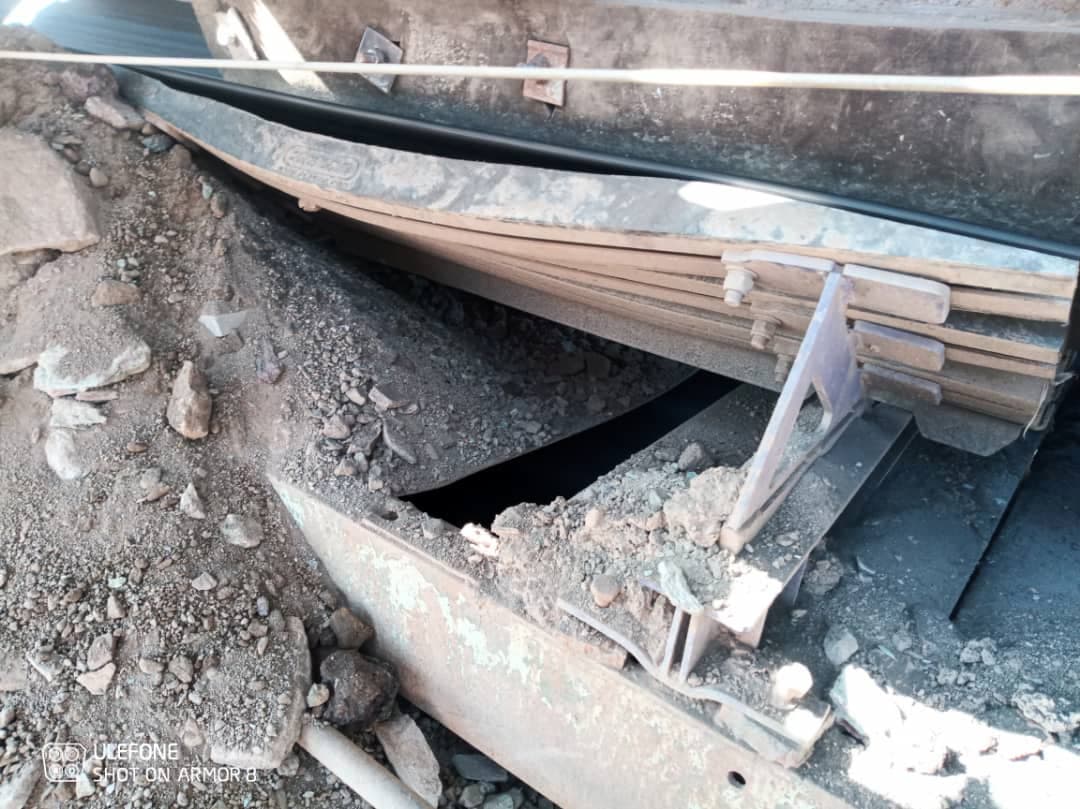
Consequence 04
Structural contact
Operational effect
Belt rubs against frames, chutes or steelwork.
Commercial consequence
Fire risk, structural wear, belt damage and stoppages.
- 05
Consequence 05
Recurring failure loop
Operational effect
The same conveyor returns to the same failure pattern after temporary fixes. Manual intervention near the running belt rises in parallel.
Commercial consequence
Maintenance budget funds symptoms instead of eliminating the cause; safety exposure compounds.
04 / How it works
Mechanical, continuous, position-specific.
The tracker reacts as the belt begins to drift, not after destructive edge contact. No power, no sensors, no routine manual adjustment.

Continuous mechanical correction
- 01
Reacts to drift, not damage
The tracker responds as the belt begins to drift off centre, rather than waiting for destructive edge contact.
- 02
Mechanical and continuous
The tracking action is mechanical and continuous, without requiring power, sensors or routine manual adjustment.
- 03
Geometry-driven correction
Controlled tracker geometry steers the belt back to centre and helps stabilise the belt before downstream damage compounds.
- 04
Position-specific architecture
Different tracker families are specified for carry-side, return-side, V-return, restricted-space and severe-duty applications.
- 05
Selection by operating envelope
Correct selection depends on belt width, speed, construction, thickness, mass, trough angle, load condition, material, environment and severity of mistracking.
05 / Category standard
Why Tru-Trac is the category standard.
Five principles that separate engineered mechanical tracking from guide-roller approaches and reactive intervention.
- 01
Correct the belt before the edge becomes the failure
Guide-roller approaches often react after the belt has already reached the edge. Tru-Trac trackers respond as drift begins, correcting belt movement through controlled tracker geometry rather than destructive belt-edge contact.
- 02
Continuous mechanical response
The system does not rely on electrical power, sensors, operators or intermittent manual adjustment. It responds mechanically as belt behaviour changes during operation.
- 03
Carry-side and return-side control
Misalignment can originate after loading, appear through the carry side, develop after discharge, or compound on the return run. Tru-Trac provides tracking architectures for each position.
- 04
Specified by operating envelope
A tracker is only as good as the specification behind it. Belt width, speed, construction, mass, material, trough angle, environment and failure history influence the correct tracker selection.
- 05
Proven in severe-duty applications
Tru-Trac tracker solutions have been applied in deep-level mining, overland conveyors, high-speed belts, wide belts, stacker reclaimers, copper, coal, platinum, iron ore, cement, ports and bulk terminals.
06 / Apex Tracker Series
The next generation of Tru-Trac belt tracking.
The Apex Tracker Series is the flagship evolution of Tru-Trac mechanical belt tracking technology. It is designed for fast, autonomous and continuous correction, compact installation, simplified adjustment and heavy-duty performance in demanding conveyor environments.
Apex is built for applications where tracking performance, installation practicality and lifecycle reliability matter: hooded conveyors, tripper cars, restricted structures, high-duty belts, abrasive materials and sites where mistracking cannot be allowed to become routine.

Apex Series
07 / Select by position
Where does the drift begin?
Different positions create different failure patterns. Pick the one that matches your conveyor — each routes to the relevant tracker architecture and sub-page.
- 01
Position
Carry side
Load-carrying side
Problem pattern
Misalignment after loading, off-centre material loading, belt drift through troughing section, spillage from edge movement.
Tracker architecture
Apex Taper Trough Tracker · Taper Trough Tracker · Speciality Trough Tracker
- 02
Position
Return side
Flat return
Problem pattern
Return-run drift, belt contamination, pulley build-up, mistracking into tail pulley, structure contact.
Tracker architecture
Apex Flat Return Tracker HD · Flat Return Tracker · Dual Return Tracker
- 03
Position
V-return
Angled return geometry
Problem pattern
Return-side belts configured through V-return geometry requiring controlled correction across angled return rolls.
Tracker architecture
V-Return Tracker · Compact V-Return Tracker
- 04
Position
Restricted zones
Hooded · tripper · constrained
Problem pattern
Hooded conveyors, tripper cars, limited clearances or structures where traditional installation geometry is difficult.
Tracker architecture
Apex Taper Trough Tracker + application-specific Apex configurations
- 05
Position
Severe duty
High-speed · wide belt · high-risk
Problem pattern
High speed, wide belts, severe mistracking, structural contact, high-cost downtime, heavy-duty operation.
Tracker architecture
Apex HD / XHD / EXHD tiers · Engineering-confirmed severe-duty configuration
08 / Customer statements
What buyers say after installation.
Approved customer statements from belt-tracking installations across mining and bulk-handling operations. Edited from the original source for clarity; first-name attribution by default.
Belt Tracking
Tru-Trac helped solve our conveyor misalignment issues and supported reliable operation in demanding mining conditions.
Coal Mining Operation · Quảng Ninh, Vietnam
Reliable misalignment correction in demanding mining environments.
Belt Tracking
The trackers continue to perform well after years of use. Installation is straightforward, and the range makes it easier to match the right tracker to different belt conditions.
Lim · UMS Malaysia
Long service life, low maintenance, application-specific tracker selection.
Tracking and Support
Tru-Trac helped us address spillage and misalignment problems in the plant. What stands out most is the support. When we face a challenge, they respond quickly with practical solutions.
Peter · Plant Maintenance Team · Glencore
Reduced spillage, reliable product quality, responsive technical support at plant level.
Belt Tracking
Tru-Trac provided a simple, well-supported application that resolved our mistracking challenges.
Rinaldi · Solusi Bangun Indonesia
Simple, supported application with effective mistracking resolution.
Tracking and Support
Tru-Trac exceeded expectations by getting equipment to site in less than 24 hours. The equipment operated well and solved the tracking issue on a problematic chevron belt.
Wynand · Takraf
Rapid response, strong service support, effective tracking on a problematic chevron belt.
Correct the belt before the edge becomes the failure.
Specify a tracker by operating envelope, not by belt width alone. Use the selector for a recommended starting point, or send your conveyor details to engineering for a verified specification.