Components · Idlers, Rollers & Frames · Zones 01 · 02 · 04
The wrong idler accelerates wear, causes mistracking, contaminates the return run and shortens belt life — and every metre of belt runs on them. Tru-Trac rollers and frames are built to the operating envelope: bearing, shell, seal and frame matched to belt tension, speed and material.
01 / Engineering logic
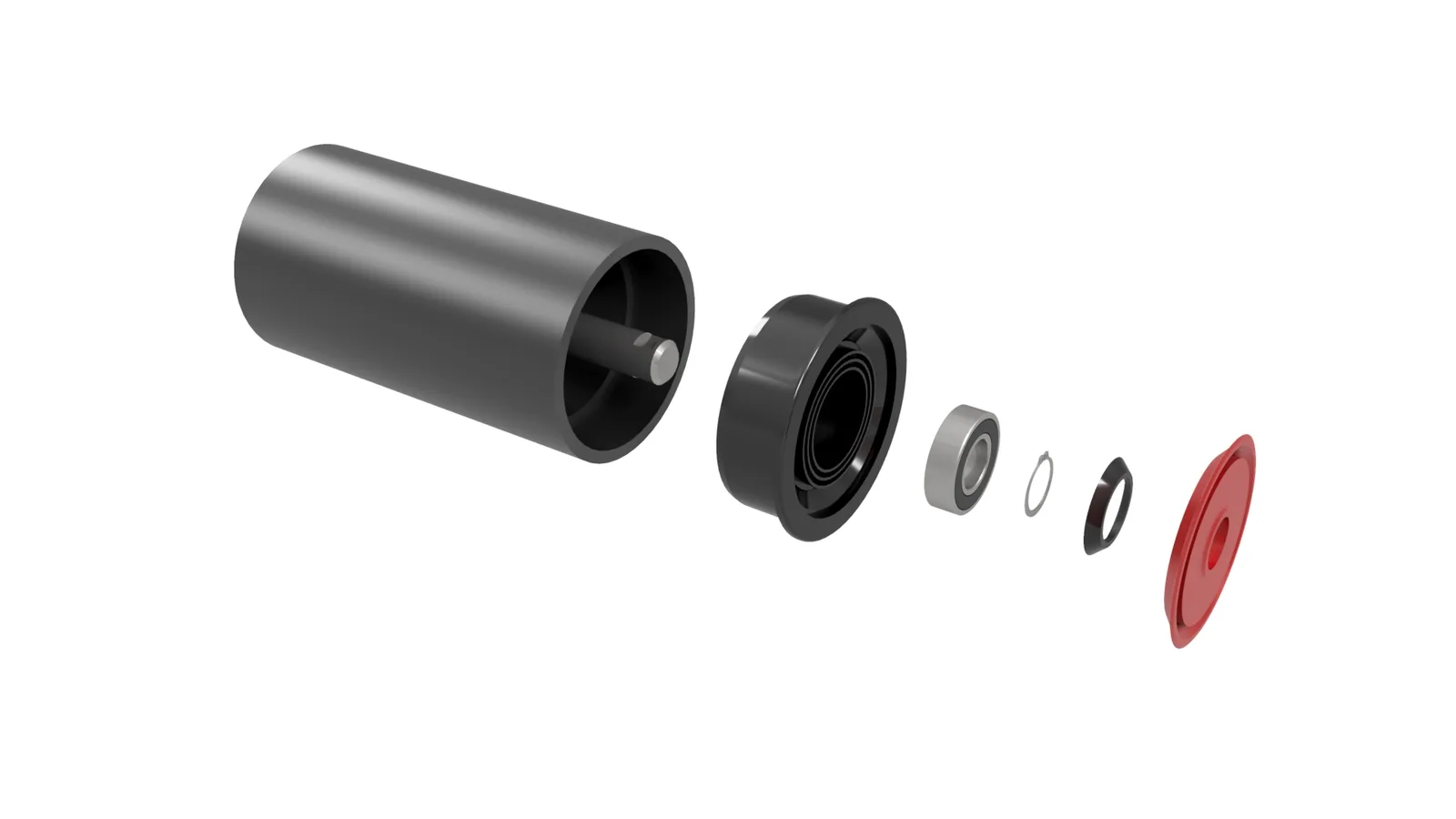
02 / Poly-Max roller architecture
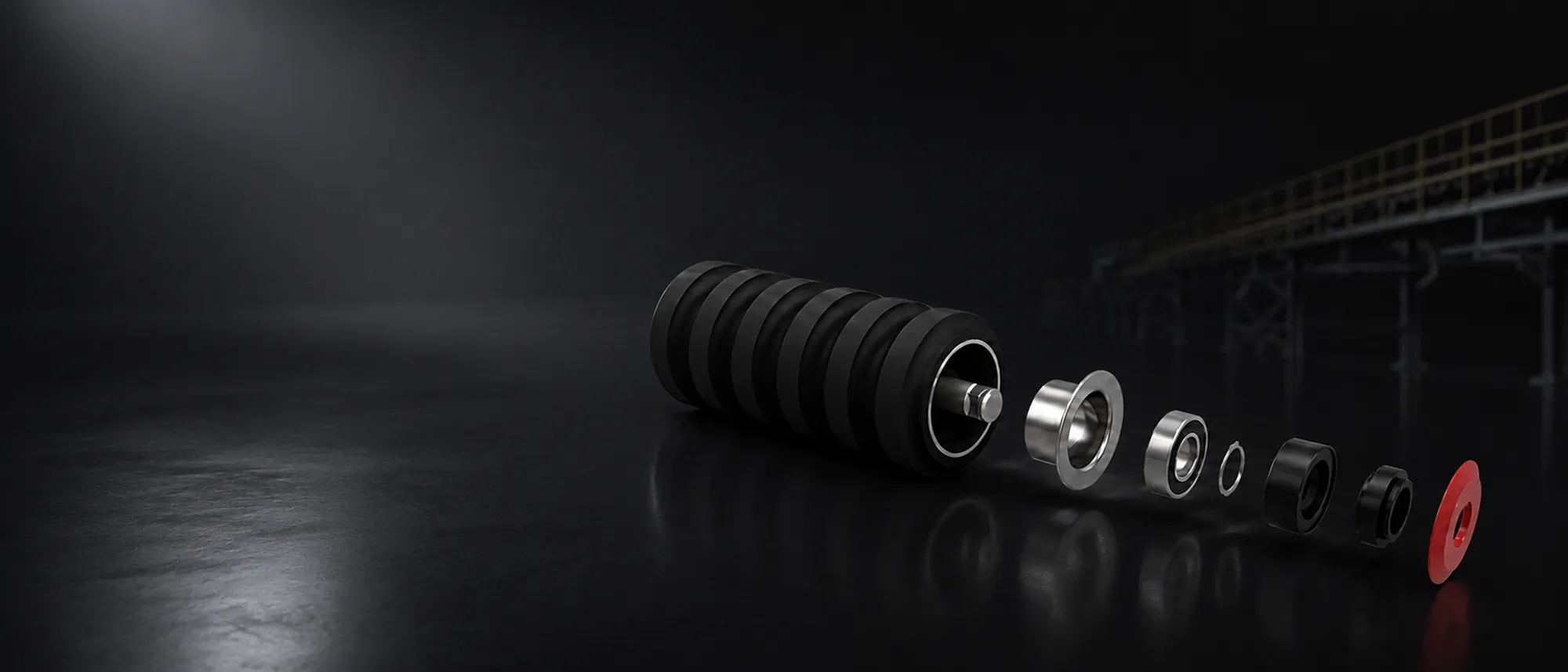
The Poly-Max is Tru-Trac's high-performance composite roller — advanced polymer technology that carries the belt at a fraction of steel's weight, with the bearing sealed for life.
03 / The range
Every figure is from the catalogue. Engineering confirms the final specification against your conveyor.
Rollers & idlers
HDPE Idler (Poly-Max)
Lightweight composite roller — up to 50% lighter than steel troughing rollers and 60% lighter than steel return rollers.
- 10 dB quieter than steel; reduced power demand and breakaway mass.
- Shaft diameters: 20–60 mm. Shell diameters: 114–219 mm.
- Total Indicated Runout (TIR) 0.2 mm; out-of-balance tolerance 0.028 Nm.
- Flame-retardant and FRAS options; resists abrasion, corrosion and chemicals.
Steel Idler
Welded end housings for smooth rotation and quiet, economic operation.
- Minimised rim drag, breakaway mass and bearing misalignment.
- Multi-labyrinth seal with an external contact seal.
- Standard lengths to SANS 1313; custom lengths available.
- Conforms to international standards.
Impact Rollers
Rubber discs on a steel tube to absorb impact in loading zones; install in reinforced frames or retainer plates.
- Roll diameters: 133 / 152 / 159 mm. Shaft diameters: 25 / 30 mm.
- Standard Impact Idler: steel bearing housing, 101 mm inner tube.
- Heavy-Duty Impact Idler: nylon bearing housing, 127 mm inner tube, larger bearing and compact rubber rings for greater impact.
Frames
Idler Frames
Configurations to SANS 1313, DIN and CEMA, plus custom.
- Belt widths: 450–2400 mm.
- 1, 2, 3 or 5-roll designs; offset or inline; top-mounted or underslung.
- Precision jig-manufactured from graded materials for symmetry — prevents idler bounce and vibration.
- Designed to the conveyor's loading and deflection limits.
Slider Trough Frames
Sliding mechanism changes troughing rolls without lifting the belt or removing adjacent frames.
- Compact inline design for tight or confined spaces; installs under loading chutes.
- Electro-galvanised frame for corrosion protection.
- Customised to fit any manufacturer's rollers; compatible with all idlers and impact idlers.

Tell us the belt, material and duty cycle and we'll specify the idler architecture for the conveyor.