

Components · Rip Prevent+ · Zone 05
On a high-value belt, an undetected longitudinal rip can become a six-figure replacement event before anyone reacts. Rip Prevent+ watches the whole belt using AI and the conveyor's own operating data — no sensors in the belt — to flag a rip condition before it propagates.
01 / Engineering logic
Developed with SHG, a German conveyor-monitoring specialist, Rip Prevent+ builds a data-driven model of your conveyor and uses AI to spot the anomalies that precede a rip — then signals the PLC in real time.
02 / Rip Prevent+ architecture
Rip Prevent+ is a single, sealed unit that taps the conveyor's electrical and operating signals, runs the AI model on-board, and drives the PLC through configurable relays — monitored over a secure web interface.
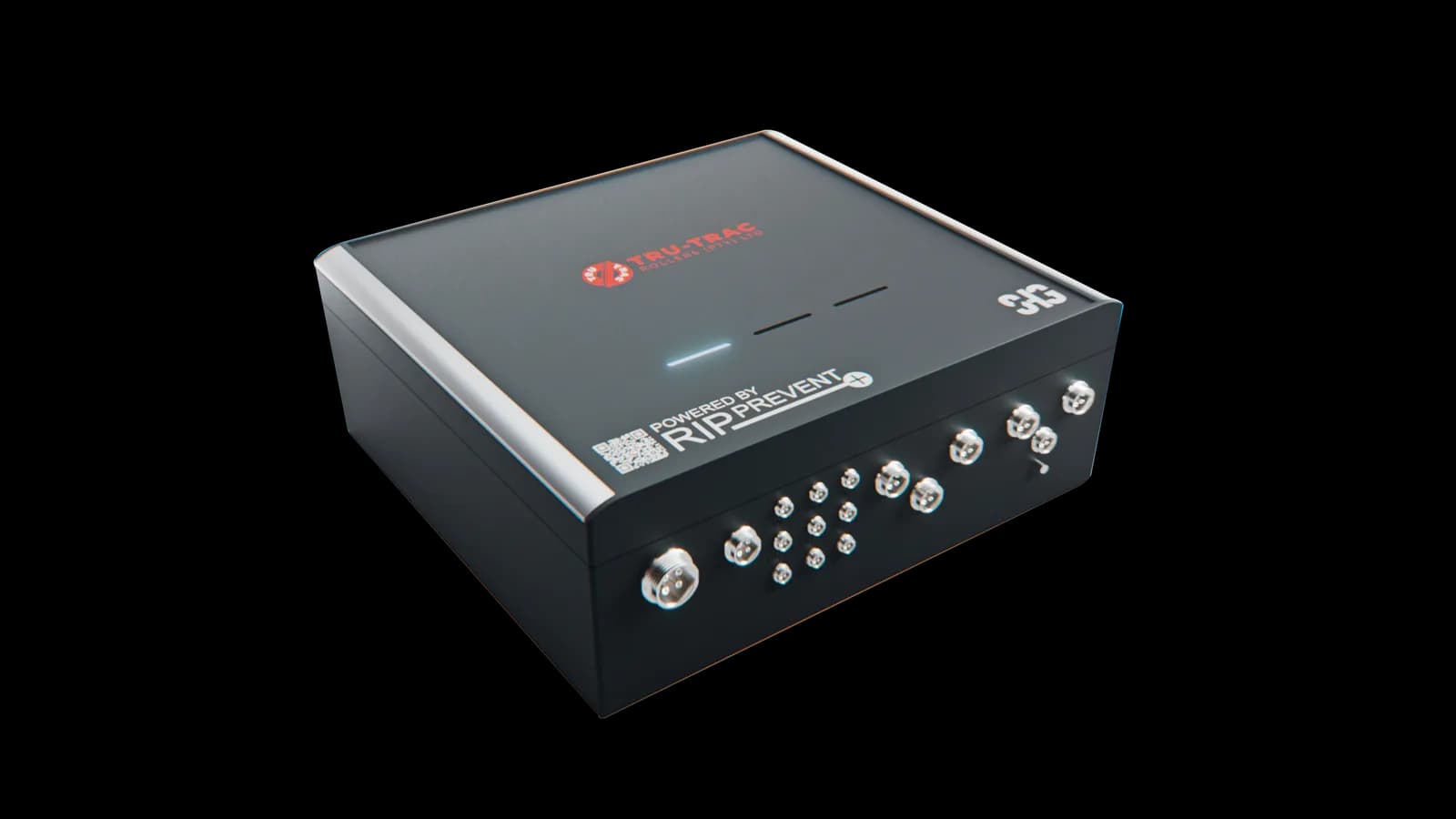
03 / The range
From the brochure. Engineering confirms configuration against your conveyor.
Technical specifications
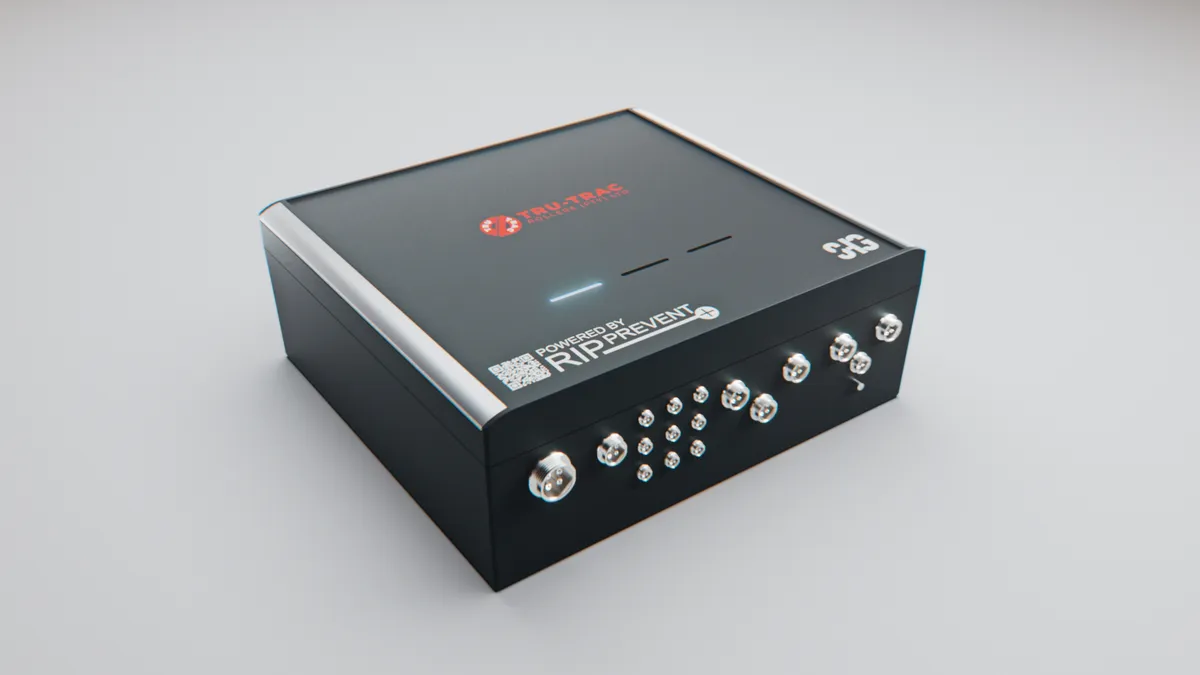
Rip Prevent+ System
- Belt width: 600–6000 mm.
- Belt speed: up to 12 m/s.
- Belt types: EP, ST and special belts.
- Temperature range: −20 °C to 55 °C.
- Humidity: 20–90% RH, non-condensing.
- System outputs: 3× open relays (max 250 V, 6 A); 1× Ethernet TCP/IP; 1× analog output 0–10 V (max 28 mA).
- Input power: 88–264 VAC / 125–270 VDC.
- IP class: IP67 (IP69K on request).
- Conformity: CE, UL, RoHS (ATEX on request).
- Dimensions: 300 × 330 × 120 mm.
Add-ons
Drive Monitoring
Early motor-failure detection from high-resolution electrical parameters, including unusual heat development.
Massflow Calculation
Mass flow from averaged bulk density, for load management and overload detection.
Condition Monitoring
Stores up to 5 years of high-resolution data for AI plant-condition assessment and early wear detection.
Energy Efficiency Improvement
Targets optimal power per tonne conveyed to cut energy demand and CO₂, with component analysis and ROI.
Maintenance Support
Component-level analysis against a database and site parameters, for planned maintenance.
Electrical Network Analysis
Identifies and corrects electrical-network quality issues in near real-time to reduce component wear.
Add-ons are free, continuously developed modules that integrate with the system.

No protection system eliminates the possibility of belt damage; suitability and detection limits are assessed per belt. Send your belt and conveyor details and we'll confirm fit.