Components · Belting, Pulleys & Lagging
Belt construction, pulley diameter and lagging type interact — get one right in isolation and the others compromise the result. Tru-Trac specifies them together against tension, speed, material and duty, manufacturing its own lagging and pulleys and supplying belting from leading global makers.
01 / Engineering logic
Slippage, pulley wear, belt-edge wear and tracking instability usually trace back to a belt, pulley or lagging chosen without reference to the other two. The specification starts from the operating envelope.
02 / The range
Lagging (Tru-Grip)
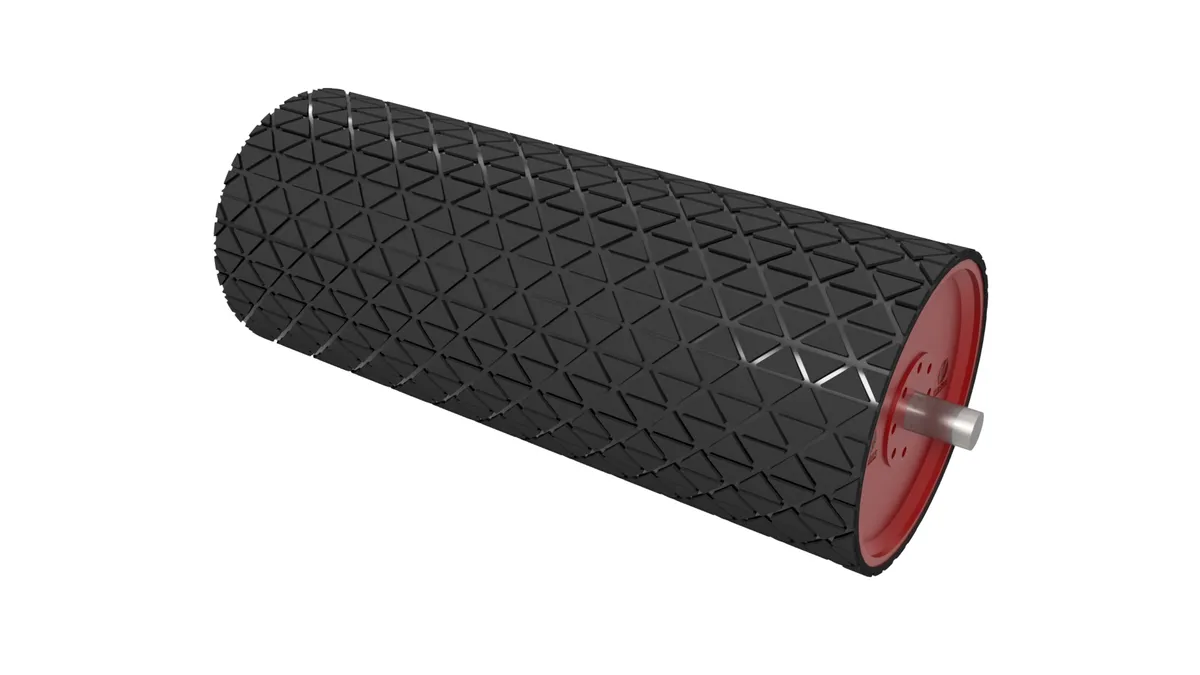
Tru-Grip Diamond Rubber Pulley Lagging
All-rounder for drive and non-drive pulleys, wet or dry, at any diameter.
- Diamond profile minimises vibration, even on small-diameter pulleys.
- CN bonding layer for high bond strength to the pulley surface.
- Reduces belt-to-pulley slippage; protects the pulley from wear and corrosion.
- Also available in fire-retardant or food-grade rubber.
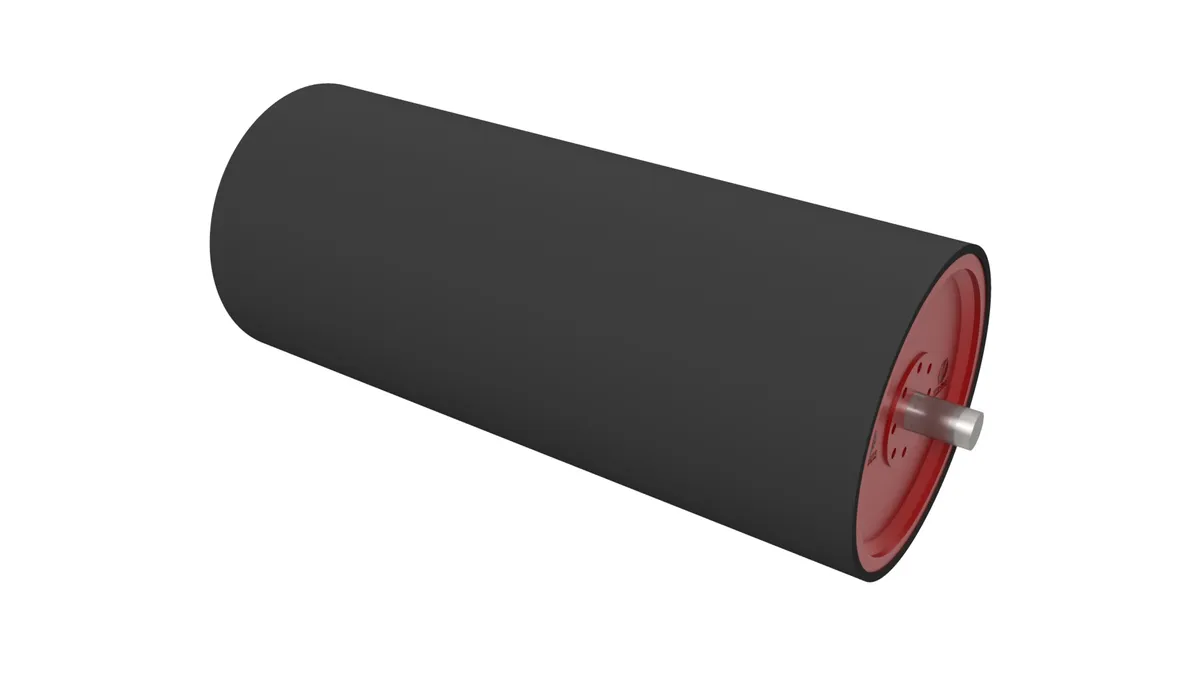
Tru-Grip Plain Rubber Lagging
For light-duty pulleys and idlers.
- CN bonding layer for high bond strength to the pulley surface.
- Supplied in standard 500 mm-wide rolls, in various lengths.
- Also available in fire-retardant or food-grade rubber.
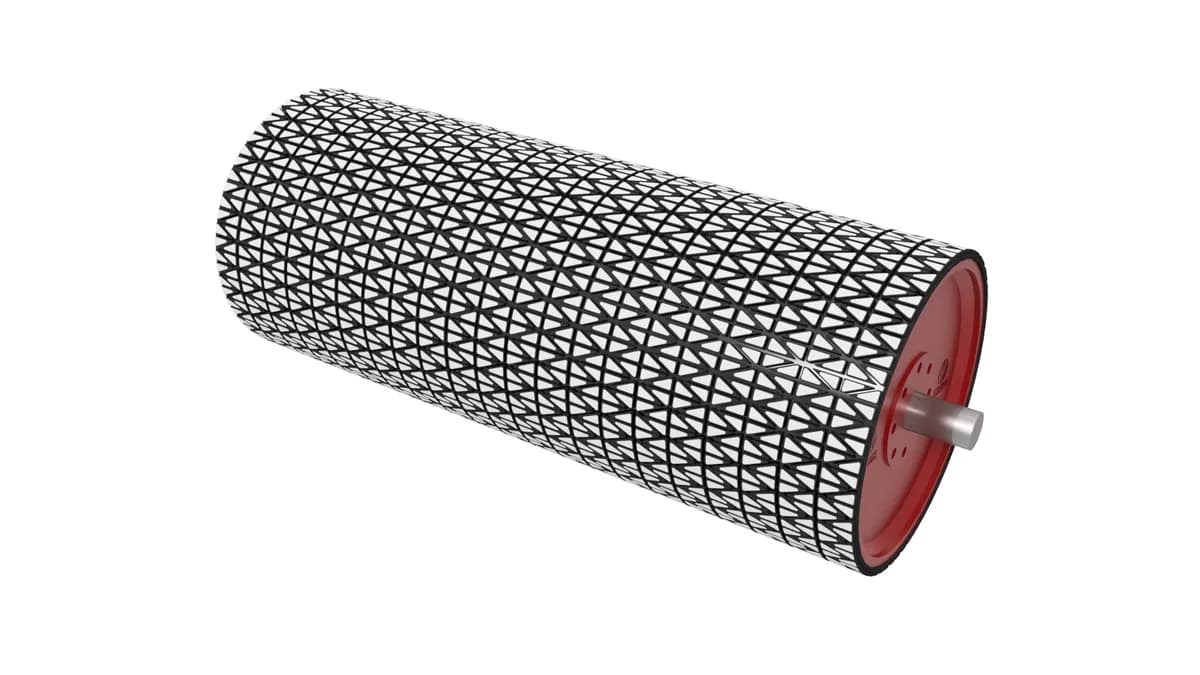
Tru-Grip Diamond Ceramic Lagging
Maximum-performance lagging for drive pulleys in medium- to heavy-duty applications.
- High traction with anti-resonance, anti-vibration design.
- Narrow tiles and reduced gaps for uniform belt conformity and longer belt life.
- Diamond pattern and circumferential grooves expel water and fines, at all speeds.
- Automated spraying yields a 100% rubber-tear-strength bond on the ceramic tiles; ceramic back enhances shear strength.
- CN bonding layer; also available in fire-retardant rubber.
Pulleys
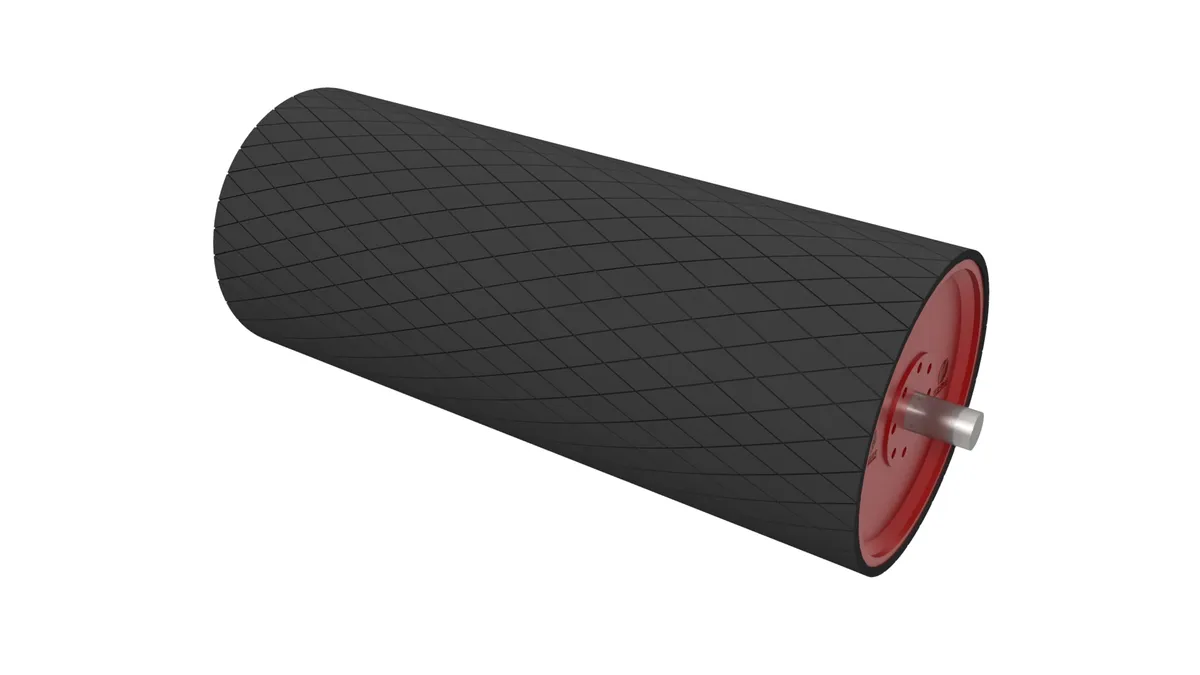
Pulleys (Drive, Tail & Bend)
Drive, tail and bend pulleys in all sizes and masses.
- Manufactured to customer-specific applications and to the highest quality standards.
- Designs verifiable by Finite Element Analysis (FEA).
- Made to SANS 1669 specifications.
Belting
Conveyor Belting
Belt classes 250 to 2000; widths 300 to 1500 mm.
- Polyester-nylon and steel-cord constructions in various grades.
- Cover grades: oil, flame, heat and chemical resistant.
- Belt types: steel-cord reinforced, textile reinforced, fire-retardant, steep-incline, heat-resistant, chevron, and PVC/PVG.
- Supplied through partnerships with leading global belt manufacturers.
Give us the conveyor’s tension, speed, material and duty, and we’ll specify the belt, pulley and lagging as one set, not three separate line items.