Belt Trackers · Carry-Side & Return-Side · Zones 02 / 04
before the edge becomes the failure.
Tru-Trac trackers steer the belt back to centre mechanically and continuously — no power, no sensors, no manual adjustment. Specified to the conveyor position and the duty.
- Mechanical correction
- No power required
- Built for severe duty
- Proven globally
02 / Pick your side
Two doors — the belt behaves differently loaded vs. returning, so the tracker is different.
 01
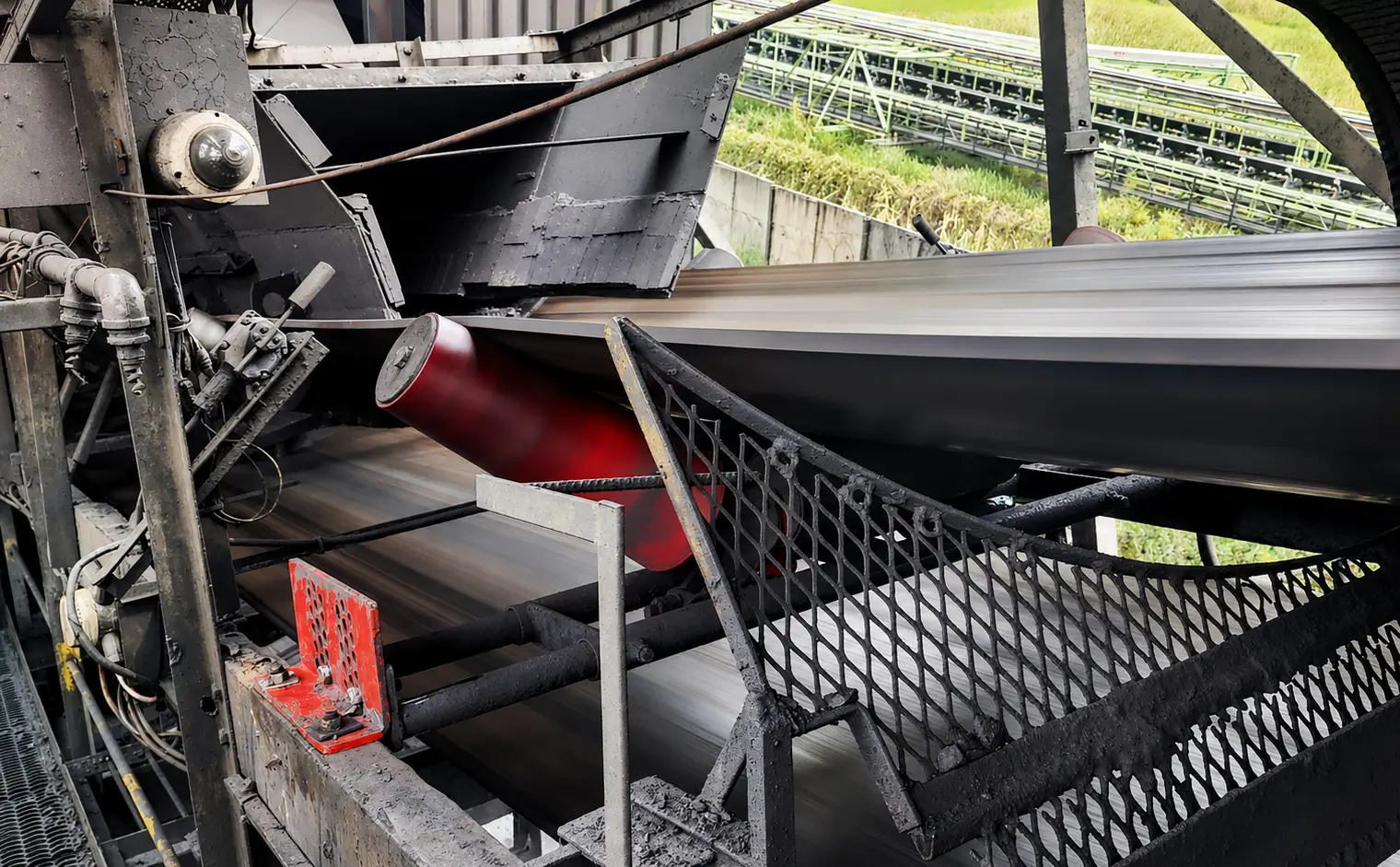
01Trough Trackers (Carry-Side)
For the loaded run, through the troughing section, after the load zone. Corrects drift while the belt is carrying material — where edge spillage and load-zone instability start.
View Trough Trackers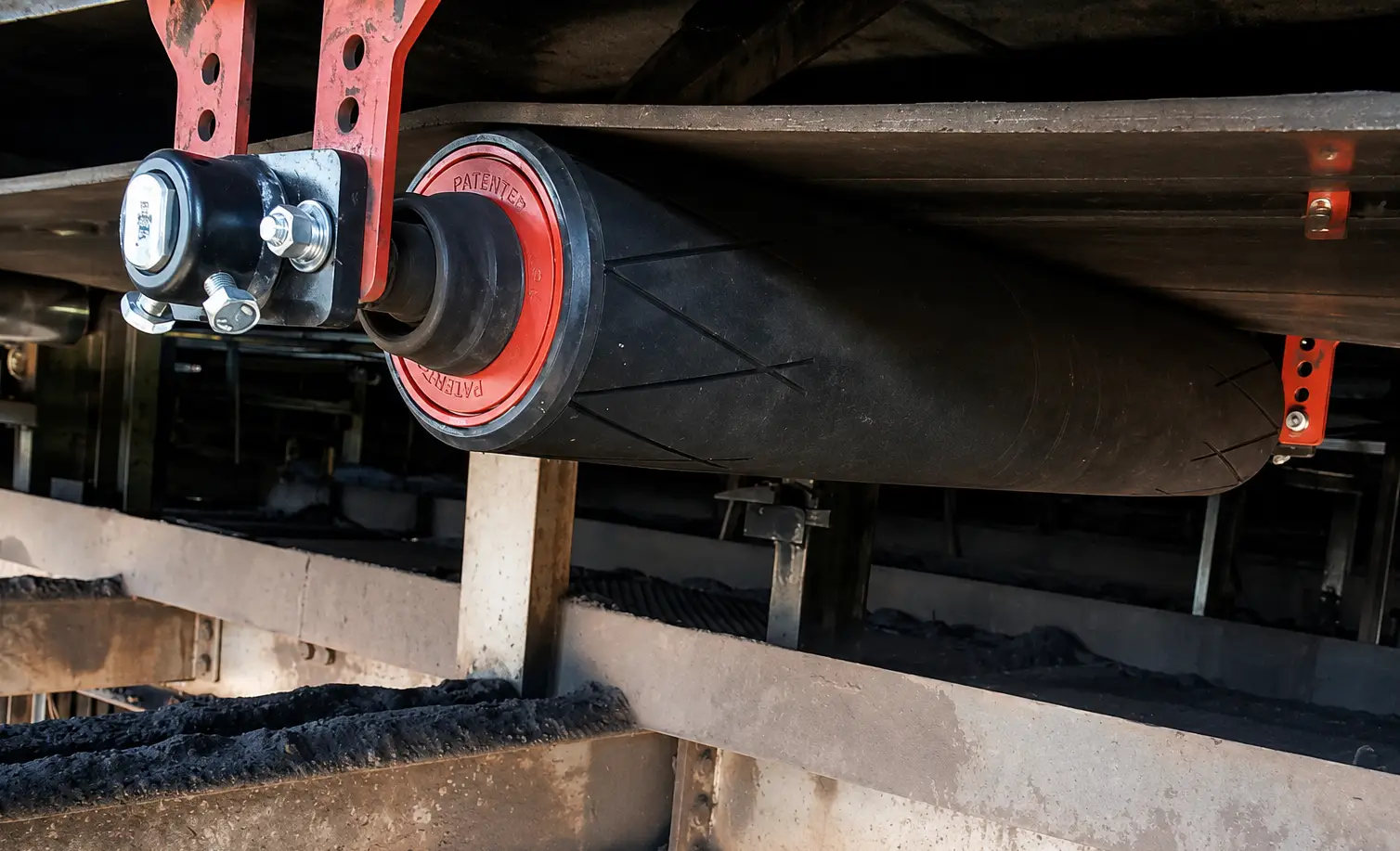 02
02Return Trackers
For the empty return run before the tail pulley. Controls drift driven by carryback, pulley build-up and belt memory — before it becomes structural contact or tail-pulley damage.
View Return Trackers
03 / Tracker range
See the key Tru-Trac trackers in motion, and how each is engineered for a specific conveyor position, belt path and operating condition.
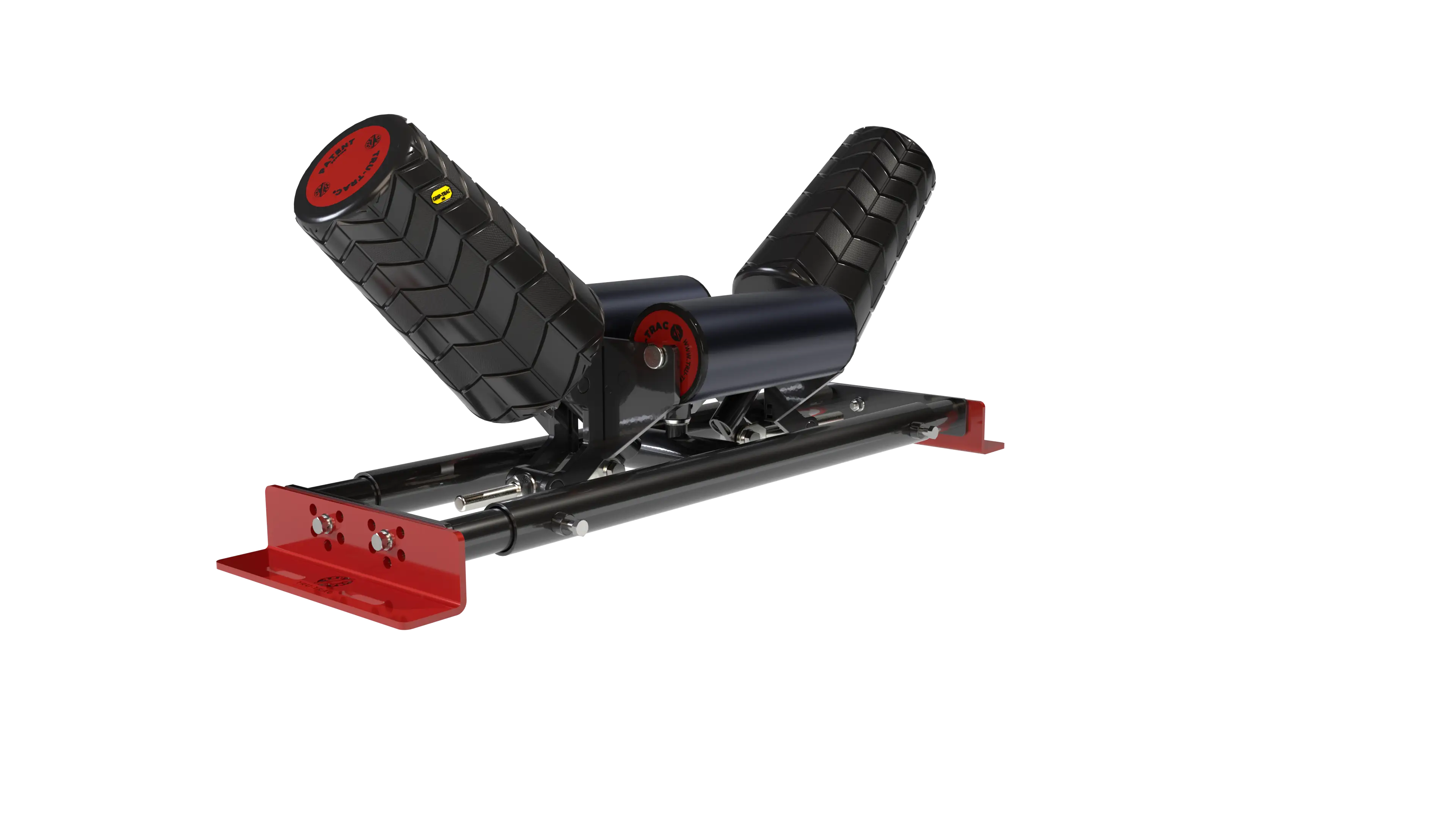
The premium carry-side tracker for demanding applications and restricted-space conveyor zones.
Position-specific geometry
Mechanical correction
No power required
Built for harsh conveyor environments
04 / The system problem
Belt misalignment is rarely just a belt-position issue. Once the belt moves off centre, it creates secondary costs right across the conveyor — edge damage, spillage, carryback, structural contact, safety exposure, and recurring maintenance intervention.
REF · Mistracking footage · in-the-field reference
 01
01Belt-edge contact
Operational effect
Edge fraying, tearing, carcass damage, and reduced usable belt width.
Commercial consequence
Premature belt replacement, emergency repairs, and increased downtime risk.
 02
02Spillage and carryback
Operational effect
Material escape, clean-up load, and contamination of return idlers and pulley surfaces.
Commercial consequence
Higher maintenance hours, safety exposure, and component replacement cost.
 03
03Carryback contamination
Operational effect
Return-side material build-up on idlers and pulleys; belt-cleaning failure.
Commercial consequence
Recurring clean-up labour, unscheduled component replacement, and lost throughput.
 04
04Structural contact
Operational effect
The belt rubs against frames, chutes, or steelwork.
Commercial consequence
Fire risk, structural wear, belt damage, and stoppages.
 05
05Recurring failure loop
Operational effect
The same conveyor returns to the same failure after every temporary fix, and manual intervention near a running belt rises in parallel.
Commercial consequence
The maintenance budget funds symptoms instead of eliminating the cause, and safety exposure compounds.
05 / How it works
The tracker reacts as the belt begins to drift, not after destructive edge contact. No power, no sensors, no routine manual adjustment.
REF · Tracker response · animated reference
- 01
Reacts to drift, not damage
Responds as the belt begins to move off centre, rather than waiting for destructive edge contact.
- 02
Mechanical and continuous
The tracking action is mechanical and continuous, without power, sensors, or routine manual adjustment.
- 03
Geometry-driven correction
Controlled tracker geometry steers the belt back to centre and stabilises it before downstream damage compounds.
- 04
Position-specific architecture
Different tracker families for carry-side, return-side, V-return, restricted-space, and severe-duty applications.
- 05
Selection by operating envelope
Correct selection depends on belt width, speed, construction, thickness, mass, trough angle, load condition, material, environment, and severity of mistracking.
06 / The selector
The Tracker Selector takes your conveyor inputs and returns a recommended family and duty tier. Severe-duty or borderline applications route to engineering — by design.
07 / Practical questions
Engineers and maintenance teams ask these before specifying or replacing a tracker. Each answer is written to stand on its own.
01What causes mistracking?
Off-centre loading, structural misalignment, idler condition, tension variation, splice issues, and build-up on idlers and pulleys. The right fix depends on whether the cause is upstream of the tracker or at the tracker itself.02Trough vs. return tracking?
Trough tracking stabilises the loaded run before the head pulley, where drift causes edge spillage and load-zone instability. Return tracking stabilises the empty belt before the tail pulley, where drift causes structural contact and tail-pulley damage.03Can a tracker fix structural misalignment?
No. Trackers respond to belt movement, not frame geometry. If the structure is out of square or idlers are off the belt centreline, that's verified before a tracker is specified.04How do I know which to specify?
By operating envelope, not belt width alone. The selector gives a starting point; severe duty is confirmed by engineering.
Trackers fix drift at the source. Use the selector for a starting point, or send your conveyor details to engineering for a verified specification.