Knowledge · Technical guide · Rip prevention
Conveyor rip prevention guide.
How rip-prevention monitoring systems work — what they detect, how they trigger a stop, and where their limitations are. A technical complement to the prevention guide.
Direct answer
How conveyor rip prevention works.
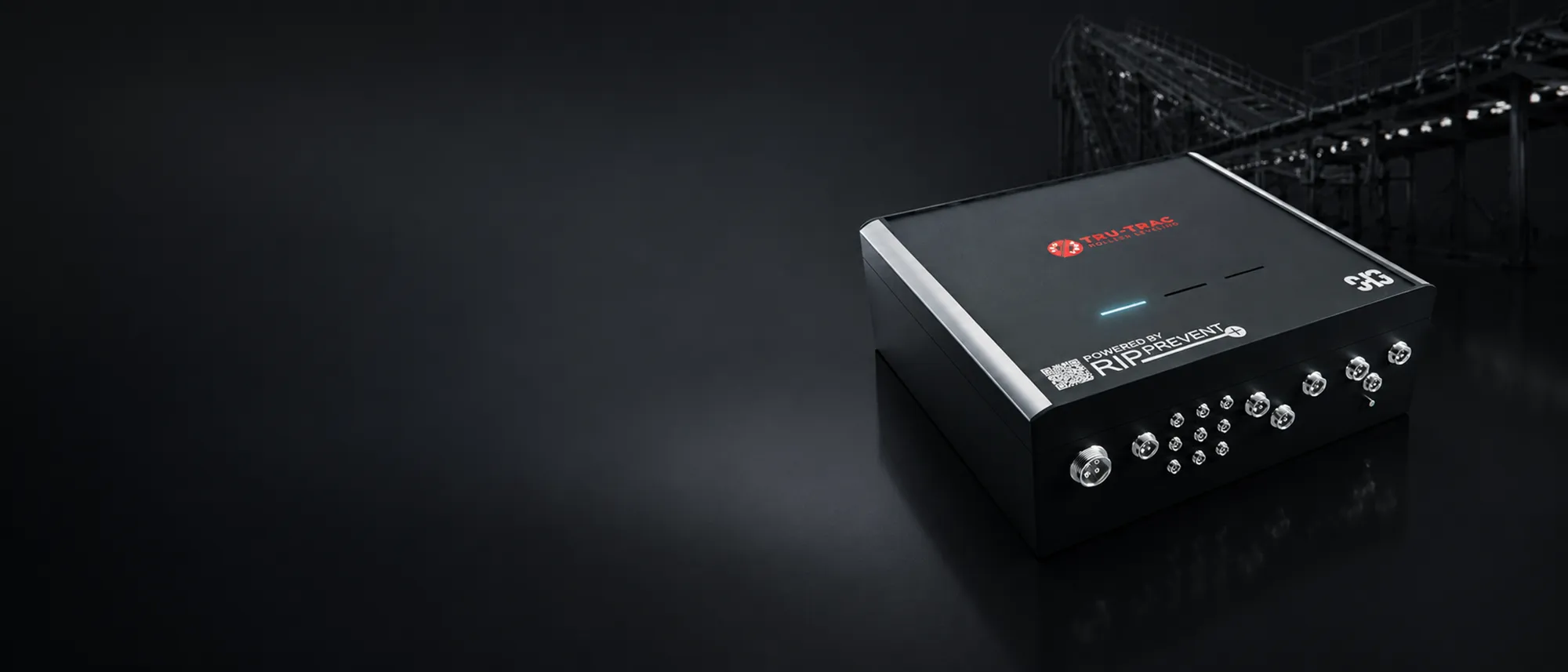
Conveyor rip prevention combines upstream containment of rip initiators with downstream monitoring of belt damage. Monitoring systems use sensors — embedded belt loops, optical scanners or other detection technologies depending on the system — to identify damage that's developed in the belt body or covers. When damage exceeding the configured threshold is detected, the system triggers a controlled stop before the damage can propagate into a catastrophic rip. Rip Prevent+ is positioned as a belt-protection monitoring system. Final detection method, sensor technology, response logic and system limitations are confirmed with the site team during specification — they vary with the belt type, conveyor envelope and risk profile.
01 / System concept
What rip prevention systems actually do.
Rip prevention systems do not prevent rips from initiating. The initiating event — tramp material wedging at a pulley, splice failure, propagating edge damage — is upstream of where these systems can act. What they do is DETECT damage in the belt body or covers at an early stage, then trigger a controlled response before the damage propagates into a catastrophic rip.
The value proposition is bounding the damage. A rip caught at 200mm length is repairable; a rip that runs the full length of the conveyor is a belt replacement plus extended downtime. Rip prevention shifts the failure mode from catastrophic to recoverable.
These systems are NOT a substitute for upstream prevention. The most effective rip-risk reduction combines tramp-material containment at loading, disciplined inspection, AND a monitoring layer — each addresses a different part of the failure chain.
02 / Monitoring approaches
How damage is detected.
Different rip-prevention technologies use different detection physics. Each has an operating envelope and a set of conditions it does and doesn't handle well.
01
Embedded sensor loops
Conductive loops embedded in the belt at intervals. When a rip cuts a loop, the loss of continuity is detected and the system triggers a stop. Independent of belt cover wear; requires belts manufactured with the loops in place.
02
Optical / visual scanning
Cameras or laser scanners observe the belt surface continuously, looking for surface damage exceeding configured thresholds. Independent of belt construction; sensitive to dust, lighting, surface debris.
03
Magnetic detection
Detects metal tramp objects on the belt before they reach the pulley. Addresses the upstream cause rather than the downstream damage.
04
Acoustic monitoring
Microphones detect characteristic acoustic signatures of developing belt damage. Less mature; complementary to visual approaches.
03 / Response logic
What happens when damage is detected.
The response sequence is engineered. Speed matters — but a controlled stop bounds damage better than an emergency stop, which can extend the rip during deceleration.
- 01
Detection event
Sensor signal exceeds configured threshold. The system logs the event with timestamp, location and severity.
- 02
Initial response
Depending on configuration: visual / audible alarm, automated controlled stop, or escalation to the control room for operator decision.
- 03
Controlled stop
If a stop is triggered, deceleration is controlled — not emergency — so the belt doesn't continue propagating damage during stopping.
- 04
Operator inspection
Operators walk the belt, locate the damage, photograph it for the maintenance record.
- 05
Repair or replace decision
Minor damage repaired in-situ. Larger damage triggers belt-section replacement or full belt change depending on extent.
- 06
System re-verification before restart
Verify the rip-prevention system is operating correctly. Identify and address the upstream cause if known. Then restart.
04 / Limitations
What rip prevention cannot do.
Stating the limitations honestly is part of specifying these systems responsibly.
A
Cannot prevent the initiating event
The system detects damage AFTER the cause has acted. Upstream prevention (tramp containment, loading discipline) is what stops rips from starting.
B
Detection threshold trade-off
Too sensitive: false stops, lost production. Too tolerant: damage that should have triggered a stop runs further. Threshold tuning is application-specific.
C
Detection coverage geometry
Sensors monitor specific points or zones on the belt. Damage between sensor coverage may propagate before reaching the next monitoring point.
D
Belt-construction compatibility
Some monitoring approaches require specific belt construction (embedded loops). Retrofit to existing belts may not be possible without belt replacement.
E
Environmental sensitivity
Optical systems are sensitive to dust, lighting and surface debris. False positives during dusty operation require tuning or alternative technology.
F
Not a substitute for inspection
Monitoring systems supplement, not replace, the belt-edge inspection regime. Visual inspection catches developing damage that monitoring might not flag yet.
Related
Technical guide
How to prevent conveyor belt rips
Upstream prevention controls and risk signs.
Read
Zone page
Belt rip prevention zone
Where rips most often start, and what to inspect.
Read
Product
Rip Prevent+ & Protection
Tru-Trac belt rip prevention monitoring system.
Read
Product
Belt Cleaners & Scrapers
Effective belt cleaning addresses the tail-pulley rip mechanism.
Read
Take action
Request support
Site-led engineering review of rip risk and system specification.
Read
Frequently asked
Practical questions, answered directly.
01What does rip detection actually do?
Rip detection systems monitor the belt for damage in the belt body or covers using sensors (embedded loops, optical scanners, or other technologies depending on the system). When damage exceeding the configured threshold is detected, the system triggers a controlled stop before the damage can propagate into a catastrophic rip. The aim is to bound the damage, shifting the failure mode from catastrophic to recoverable.02Does rip detection stop all belt rips?
No. Rip detection systems address the downstream damage, not the upstream cause. They cannot prevent the initiating event (tramp material wedging at a pulley, splice failure, propagating edge damage). They also have detection thresholds and coverage geometry that mean some damage may propagate further than detected. Effective rip-risk reduction combines tramp-material containment at loading, disciplined inspection, AND monitoring — each addresses a different part of the failure chain.03What happens after the system triggers a stop?
The conveyor decelerates under controlled conditions (controlled stops bound damage better than emergency stops). Operators walk the belt to locate and assess the damage. Repair or replacement decisions follow from the damage extent — minor damage can be repaired in-situ, larger damage triggers belt-section replacement, catastrophic damage requires full belt change. Before restart, the upstream cause should be identified and the monitoring system re-verified.

Specify rip prevention against the actual risk.
Tell us about the conveyor, the belt type, the tramp exposure and the current monitoring regime. We'll specify the right combination of controls.