

Belt Scales · Integration & Monitoring · Zone 05
A scale measures; the monitoring stack makes the measurement useful. From the integrator on the frame to cloud reporting and AI diagnostics, Tru-Trac closes the loop between the belt and the control room.
01 / Monitoring architecture
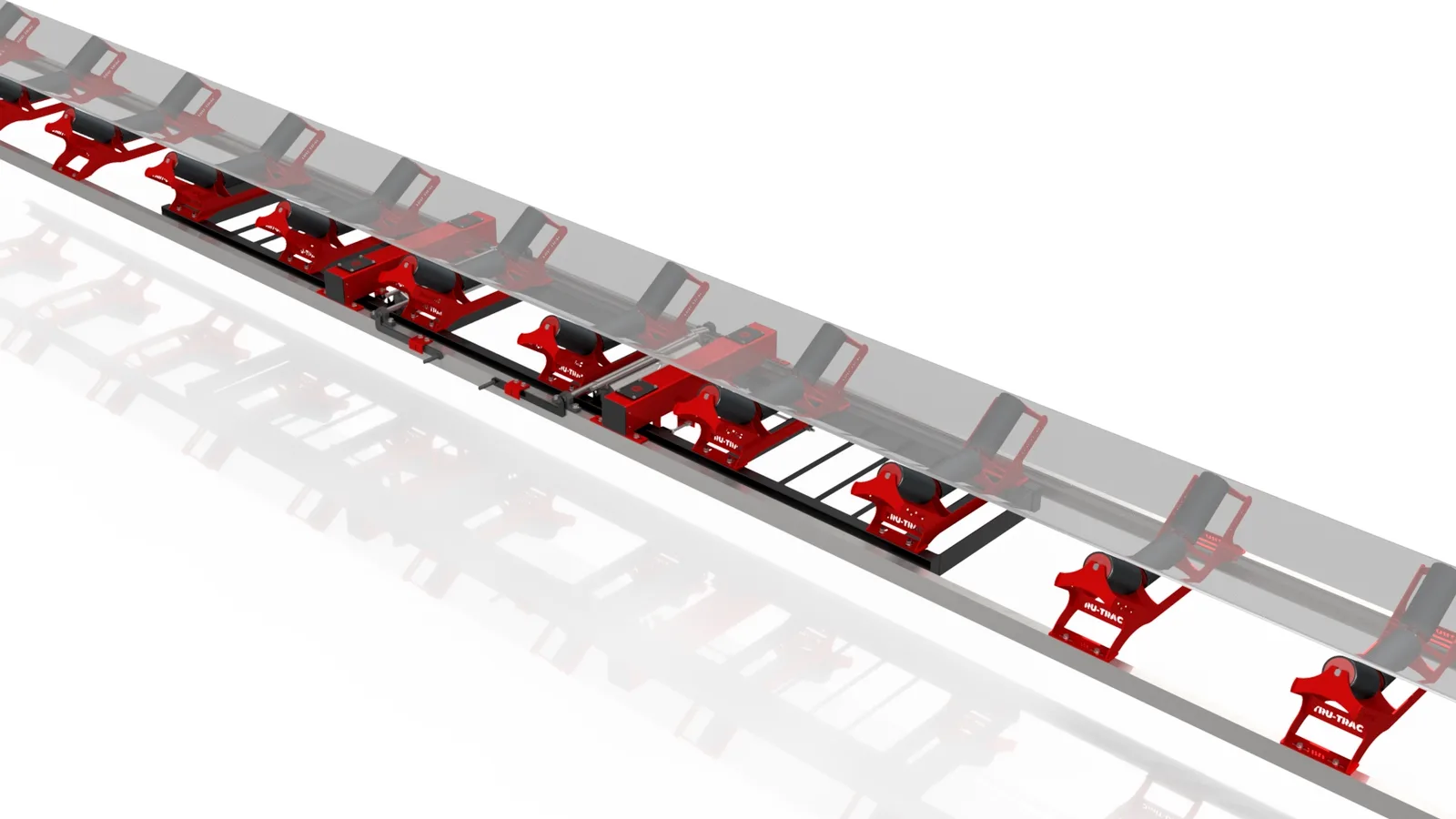
How the signal travels — from load cell to decision. Each layer adds intelligence to the signal without breaking the chain — so a load-cell reading becomes a calibrated tonnage, a logged event and, if something drifts, an alert.
02 / The range
Product data is from the Tru-Trac Belt Scales catalogue; final specification is confirmed by Tru-Trac engineering.
The monitoring stack
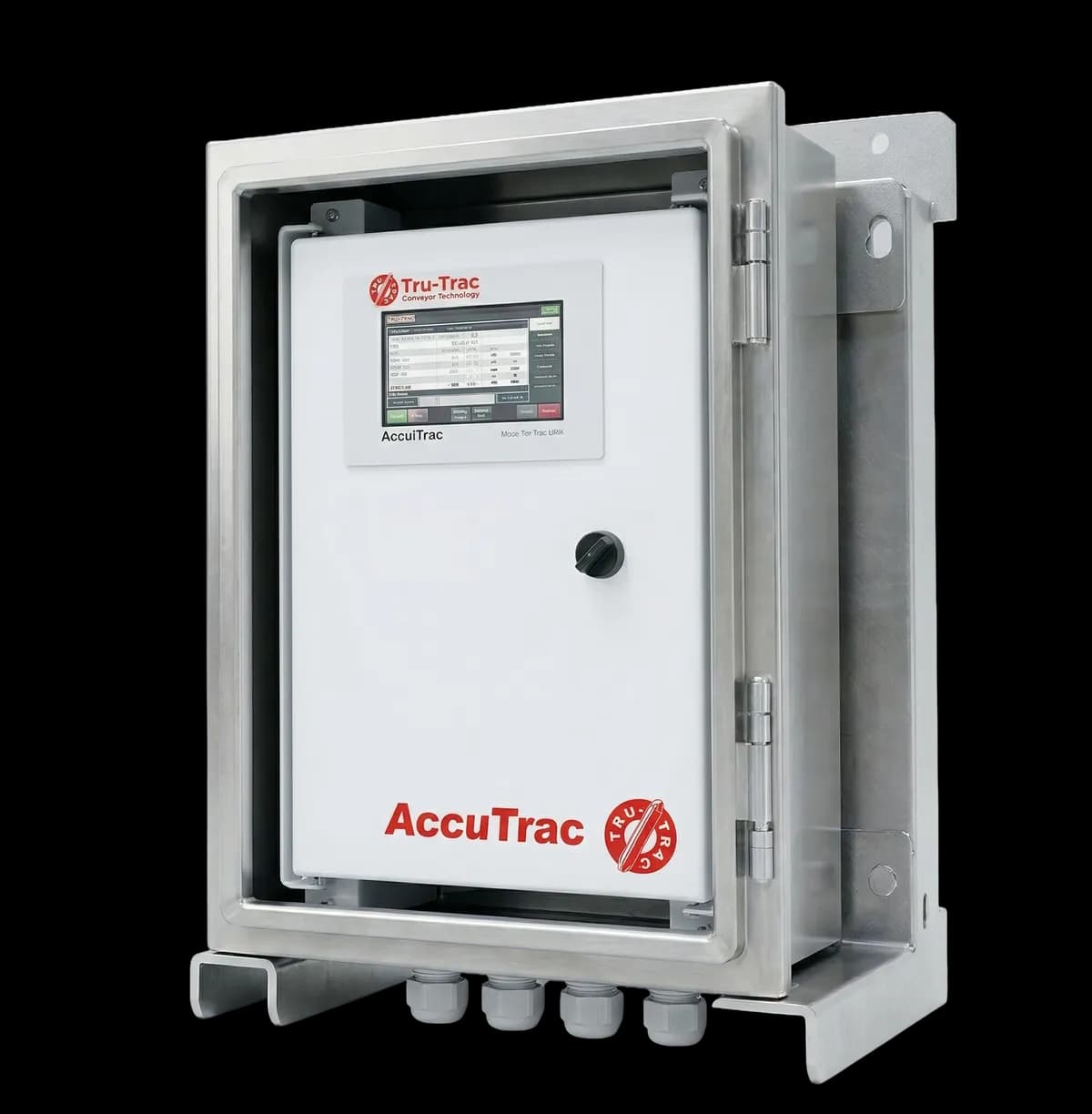
AccuTrac Premium Integrator
Computes material flow rate and total tonnage from the belt weigher.
- Supports up to four load cells and various speed sensors, with an internal speed simulator if a sensor fails.
- Touchscreen HMI; customizable data tiles; on-board diagnostics for weight, speed and calibration signals.
- Interfaces with external devices over multiple communication protocols; data logging with USB.
- Inclinometer integration adapts to incline changes without recalibration.
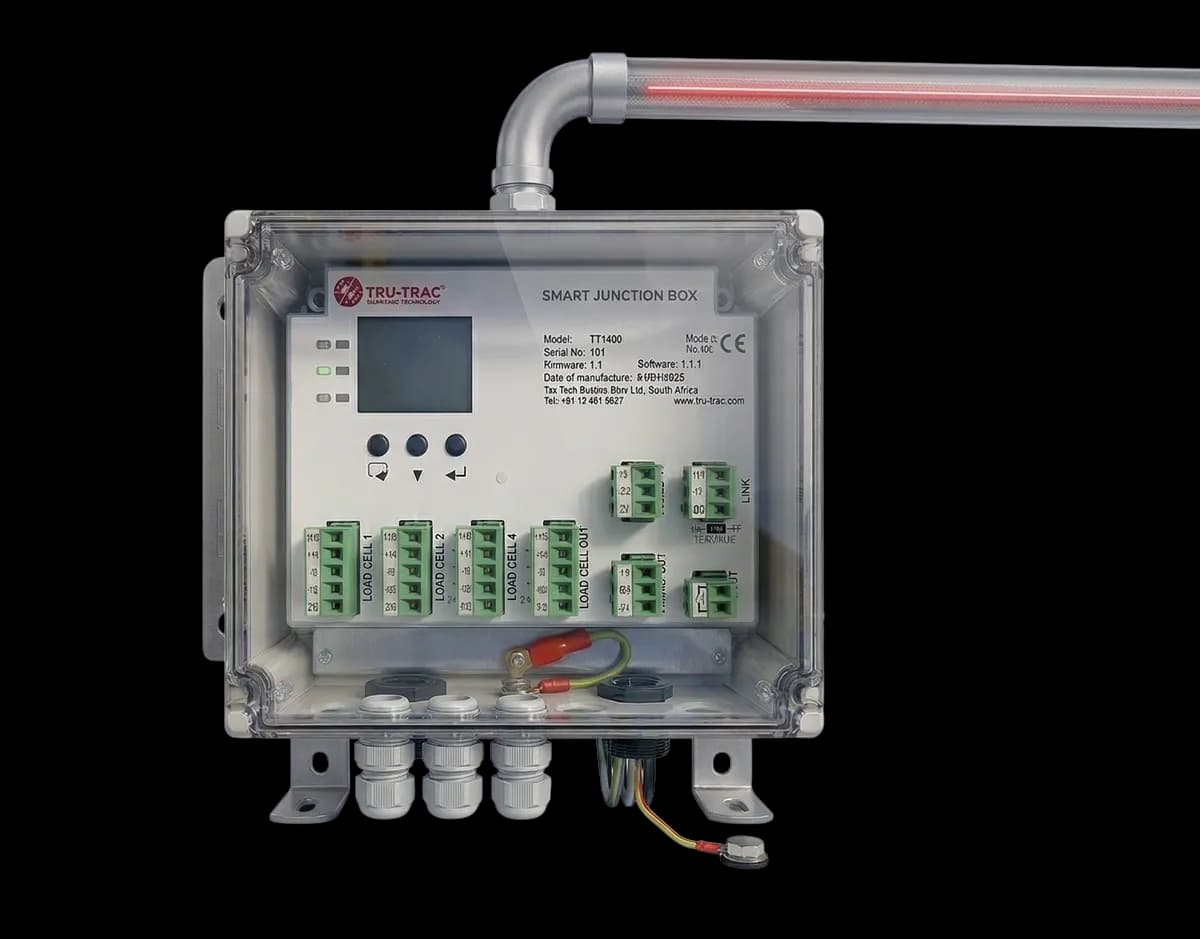
Smart Junction Box
Real-time monitoring of each load cell — condition, output and load balance at a glance.
- Transmits millivolt and belt-speed data digitally over Modbus TCP.
- Failure compensation maintains weighing continuity if a load cell fails.
- Individual mV readings for balancing, calibration and fault-finding; predictive-maintenance alerts.
- Rip Prevent+ enabled — flags off-centre loading, a key cause of misalignment and belt damage.
- Expandable industrial terminal blocks for multiple cells and future expansion.
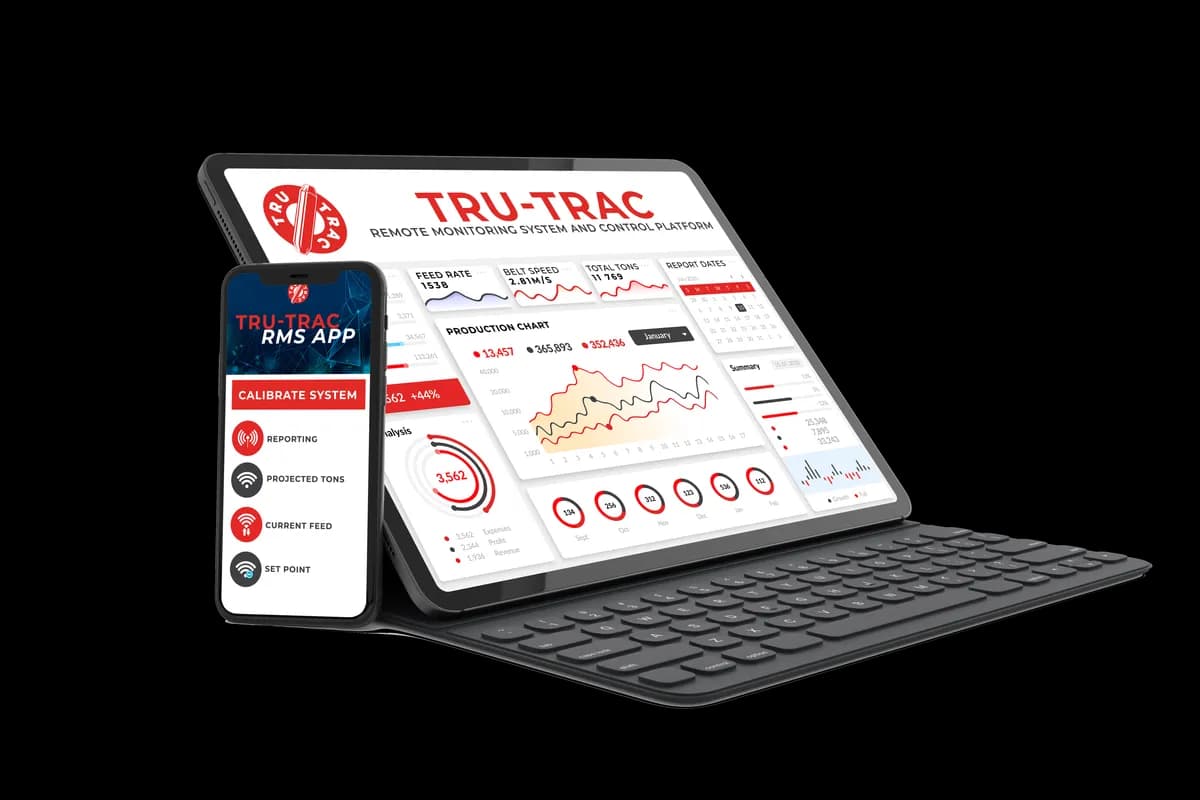
Remote Monitoring System
Real-time production data on PC and mobile (via www.tru-trac.app).
- Cloud event logging of idling, downtime and shutdown every minute; automatic emailed reports.
- Tracks tonnage, loadings, feed rate, belt loading and belt speed against production targets.
- Data visualisation, OEE / OOE metrics and a customizable alert system.
- ERP integration via API; connectivity over Wi-Fi or GSM.
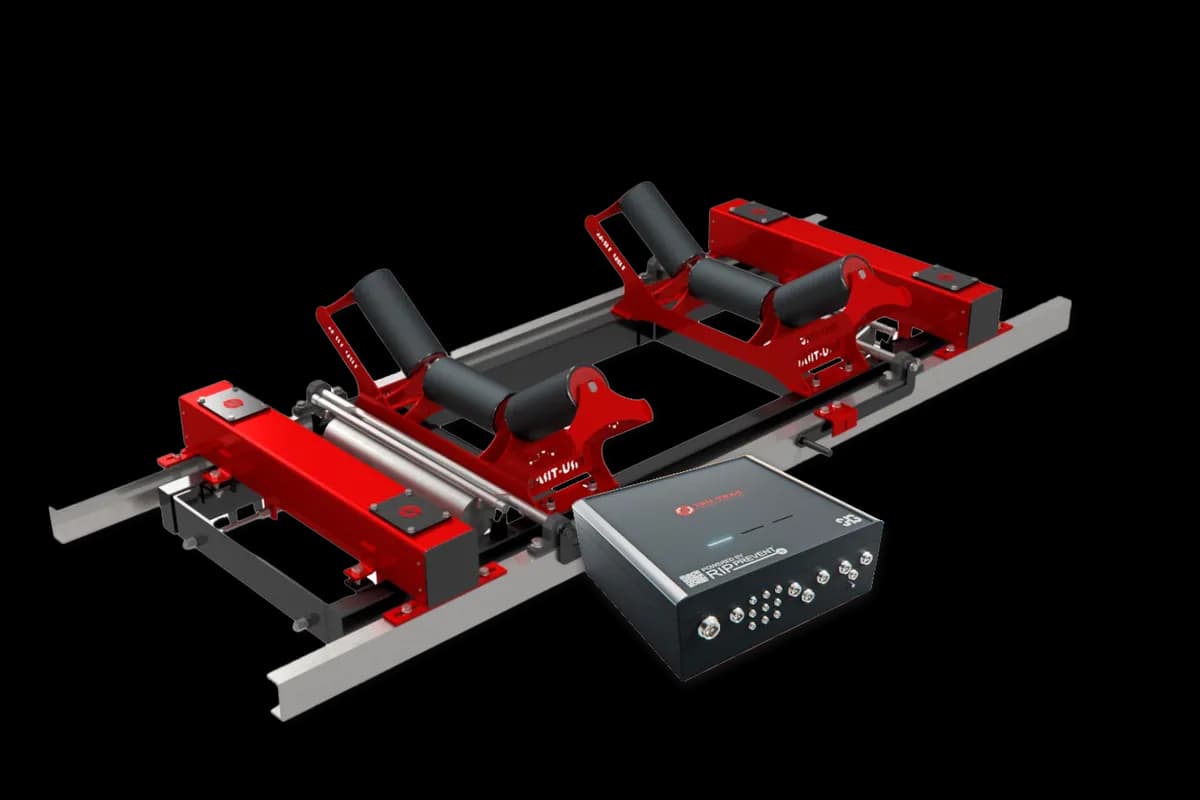
AccuTrac AI Scale System
Continuously compares live readings against expected performance to hold long-term accuracy.
- AI anomaly detection flags abnormal patterns early for proactive maintenance.
- Independent load-cell diagnostics and weight-distribution monitoring (uneven loading / misalignment).
- Fault tolerance — recalculates from the remaining sensors if a cell fails.
- Smart alerts and calibration prompts; secure, configurable reporting and performance history.